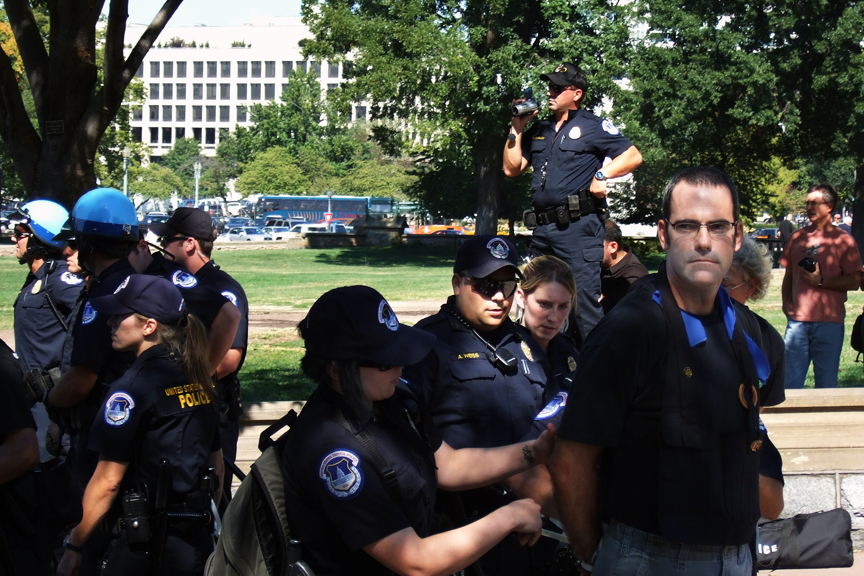
President Obama gave a Middle East policy speech at the State Department on May 19th, followed by an address to the AIPAC convention on May 22, 2011. The rhetorical flourishes were beautiful, but the chasm between the President’s rhetoric and the actions of the United States in the Middle East is both disheartening and heartbreaking.
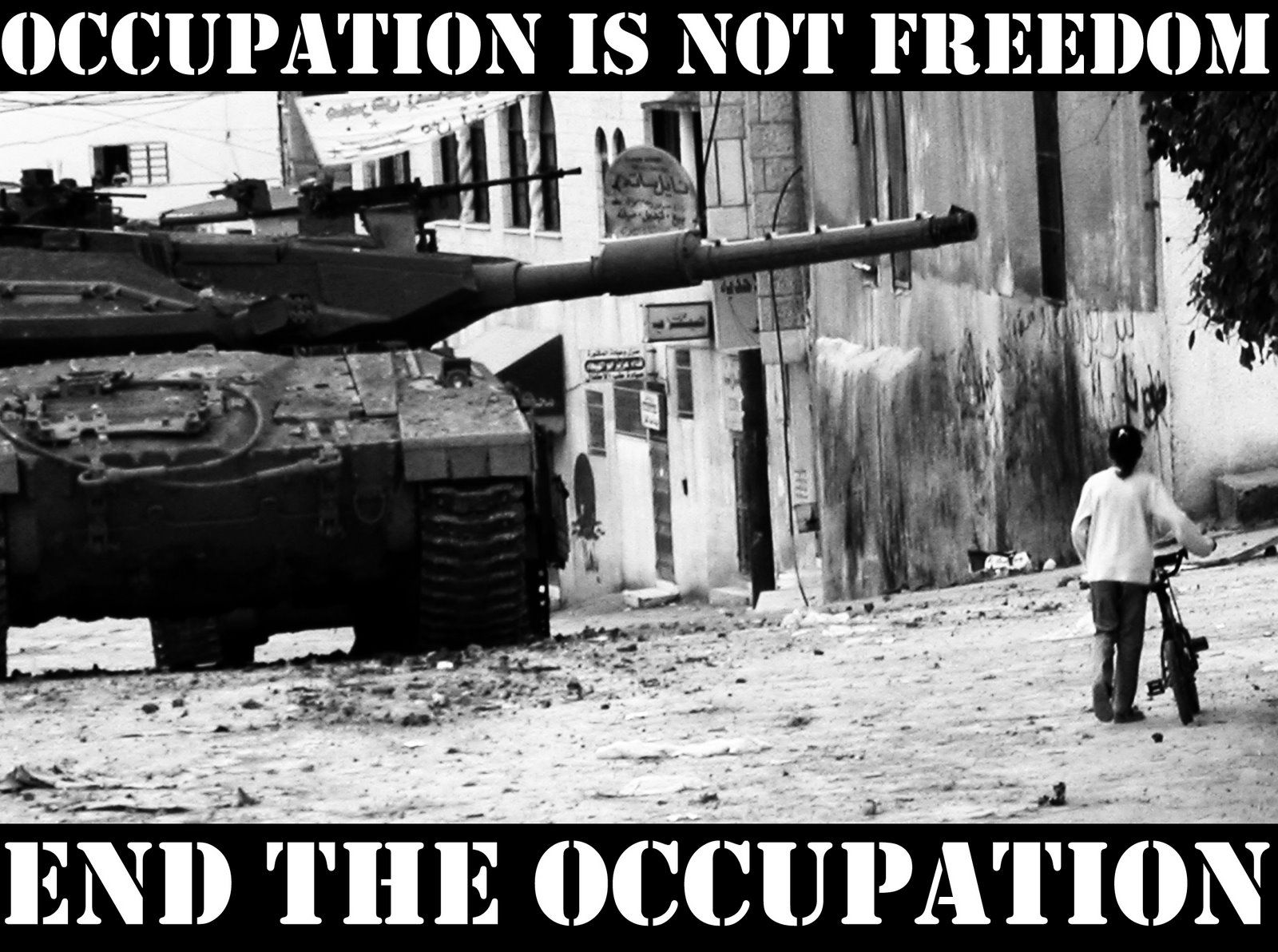
President Obama spoke of the United States’ ironclad commitment to Israeli security. Without any background on the current situation in the Middle East and particularly in Israel and the Occupied Territories, one would never know that Israel has the 5th largest military in the world and the only arsenal of nuclear weapons in the region. One would be hard pressed to know that during ‘Operation Cast Lead’ in Dec 2008, 400 Palestinian civilians died for each Israeli civilian killed.
Obama at AIPAC:
‘America’s commitment to Israel’s security also flows from a deeper place —and that’s the values we share. As two people who struggled to win our freedom against overwhelming odds, we understand that preserving the security for which our forefathers fought must be the work of every generation. As two vibrant democracies, we recognize that the liberties and freedom we cherish must be constantly nurtured.’
President Obama failed to recognize the fact that the Palestinian people also find themselves struggling to win their freedom against overwhelming odds- with both Israel and the United States aligned against them. He also fails to mention that the liberties and freedoms we cherish are denied Arabs in Israel as well as the West Bank and Gaza.
Obama at the State Dept:
‘There must be no doubt that the United States of America welcomes change that advances self-determination and opportunity. Yes, there will be perils that accompany this moment of promise. But after decades of accepting the world as it is in the region, we have a chance to pursue the world as it should be.’
Perhaps better words than ‘decades of accepting’ would be ‘decades of enabling’ as America’s policies in the region kept despots in power and people oppressed. Our President fails to recognize that the Palestinian people have a stake in the Arab Spring and they will continue their struggle for self-determination, dignity, and equal rights, with or without the support of the United States.
Obama at the State Dept:
Speaking of the events in Tunisia that sparked the revolution, our President said, ‘It is the same kind of humiliation that takes place every day in many parts of the world – the relentless tyranny of governments that deny their citizens' dignity.’
There was no mention of the Israeli military checkpoints in Hebron where males as young as 10 years old are made to lift their shirts before they pass, or the demolition of countless Palestinian homes for the lack of an Israeli permit.
Obama at the State Dept:
‘The United States supports a set of universal rights. And these rights include free speech, the freedom of peaceful assembly, the freedom of religion, equality for men and women under the rule of law, and the right to choose your own leaders — whether you live in Baghdad or Damascus, Sanaa or Tehran.’
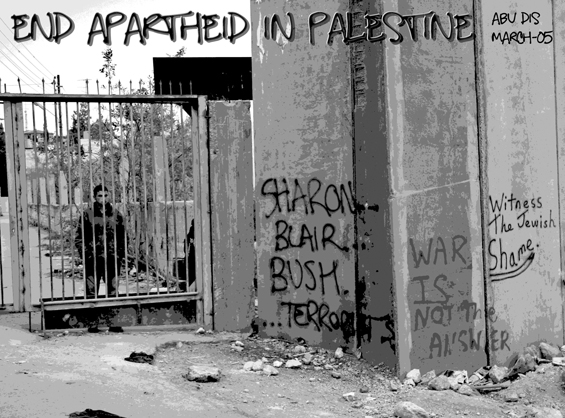
Again our President doesn’t include Haifa or Jerusalem where Arabs are 2nd class citizens, he does not mention the web of roads for Israelis only in the West Bank, nor does he mention any of the unrecognized towns under demolition orders in the Negev. He does not include Ramallah, Bethlehem, Bi’Lin or Gaza City. Surely this was an act of omission, a mere oversight. Of course he recognizes that Palestinians, whether citizens of Israel or citizens of the Occupied Territories should be afforded the same ‘universal’ rights?
Obama at the State Dept:
‘Let’s remember that the first peaceful protests in the region were in the streets of Tehran, where the government brutalized women and men, and threw innocent people into jail. We still hear the chants echo from the rooftops of Tehran. The image of a young woman dying in the streets is still seared in our memory.'
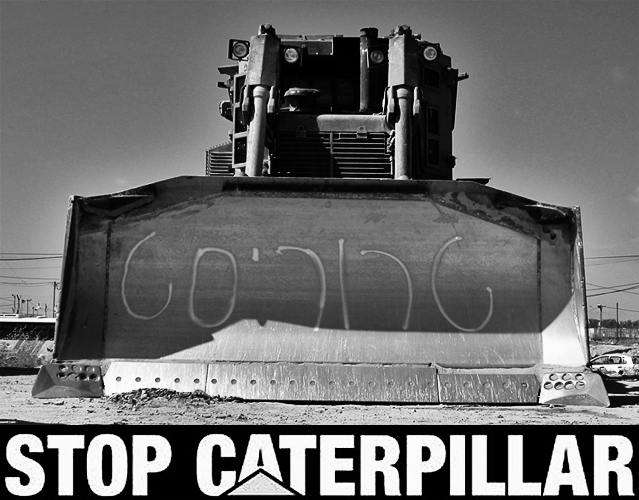
Is President Obama unaware that the Palestinians have been demonstrating peacefully against the Separation Wall, the illegal appropriation of their land and resources, the illegal checkpoints and other abuses of the Israeli state for many years? It is unfortunate that the image of 11 year old Muhammad al-Durrah, dying in his father’s arms, gunned down by “the most moral army in the world” is not seared in his memory. It is unfortunate that the image of the al-Samouni family, 29 persons in all, killed by the IDF in Gaza during “Cast Lead” is not seared in his memory. It is unfortunate that the image of a young American woman, Rachel Corrie, run down by an Israeli bulldozer, is not seared in his memory.
Obama at the State Dept:
‘The United States opposes the use of violence and repression against the people of the region.’
‘The Syrian government must stop shooting demonstrators and allow peaceful protests. It must release political prisoners and stop unjust arrests. So far, Syria has followed its Iranian ally, seeking assistance from Tehran in the tactics of suppression. And this speaks to the hypocrisy of the Iranian regime, which says it stand for the rights of protesters abroad, yet represses its own people at home.’
Syria should be called out for its abuses as well as Libya… But why are the Libyans who have declared violence against Gaddafi and taken up arms considered freedom fighters and Palestinian youth who have taken up stones called terrorists? And why was there no mention of the gunning down of peaceful protesters on Israel’s borders just 4 days earlier? The Iranian regime doesn’t have a monopoly on hypocrisy in the region.
Obama at AIPAC:
‘As for security, every state has the right to self-defense, and Israel must be able to defend itself – by itself – against any threat. Provisions must also be robust enough to prevent a resurgence of terrorism; to stop the infiltration of weapons, and to provide effective border security. The full and phased withdrawal of Israeli military forces should be coordinated with the assumption of Palestinian security responsibility in a sovereign, non-militarized state.’
If only the statement that ‘Israel must be able to defend itself- by itself’ meant that the United States was ending the $3 billion in military support we provide on a yearly basis, but I’m afraid not.
We have heard continuously about Israel’s security. Not once in the past week did President Obama speak of security for Palestinians. This is a reflection of Israeli propaganda, which blames every civilian death on the victims themselves. Often they are described as human shields. Always their deaths are blamed on ‘terrorists’.
This propaganda directly contradicts the Israeli military concept known as the ‘Dahiya doctrine’, formulated during the Lebanon war. This military doctrine views disproportionate destruction and creating maximum disruption in the lives of many people as a legitimate means to achieve military and political goals. Major General Gadi Eisenkot, the Israeli Northern Command chief, expressed the premise of the doctrine: ‘What happened in the Dahiya quarter of Beirut in 2006 will happen in every village from which Israel is fired on. […] We will apply disproportionate force on it and cause great damage and destruction there. From our standpoint, these are not civilian villages, they are military bases. […] This is not a recommendation. This is a plan. And it has been approved.’
In his Middle East policy speech our President spoke of freedom, non-violence and democracy. In his AIPAC speech he failed to mention these concepts, but clarified America’s ironclad commitment to a secure Israel, a commitment that comes in the form of weapons used to oppress the Palestinian people.
President Obama states that every state has a right to self-defense. In the next sentence he states that a Palestinian state will be denied this right in order to secure Israel.
The status quo remains. It is business as usual for Israel, the President and the United States, Arab Spring be damned.
Friday, May 27, 2011
Shared Values, Ironclad Security and Incredible Hypocrisy.
Tuesday, May 17, 2011
Why I’m going to Gaza.
Every time I hear American journalists use words like “storming”, “rioting”, “infiltrating” and “terror, terrorism and terrorist” in describing Palestinian protesters marching with flags, or youth throwing stones at tanks, APC’s, and soldiers armed with American weapons, I vow to support those who march for their dignity and resist the theft of their lands and resources.
Every time I read that Palestinian youth throwing stones are met with Israeli soldiers firing teargas, rubber bullets and live ammunition, and now, using attack dogs, I vow to support the youth being shot and mauled.
Every time Israeli soldiers kill a child and our country declares Israel has a right to defend itself, I vow to stand with the children.
Every time America proclaims that people have a right to freedom, and my country acquiesces as non-violent Palestinian activists are shot, I vow to stand with the activists.
Every time America lashes out at China and other countries for the illegal detention of dissidents yet remain mute regarding the thousands of Palestinians detained in Israeli prisons, (including over 300 children), I vow to stand with the prisoners.
Every time I hear our Congress pushing resolutions that deny the Palestinians their rights and blame them for their plight, I vow to stand by the oppressed.
Every time I hear our representatives veto resolutions at the UN aimed to hold Israel accountable, I vow to stand with those denied a voice.
Every time I hear Netanyahu proclaim that non-violent Palestinian protesters are intent on “destroying Israel”, and my country stands mute, I declare that my voice will be heard.
Every time I hear someone deny the Nakba (which continues to this day in the Jordan valley and throughout the West Bank) and deny the rights of Palestinians the very same rights we claim are “universal” for others- the right to security, the right to self-determination, the right to land and resources, the right to medical care, the very right “to exist”, I vow to support the Palestinian people in securing these rights.
Every time an innocent dies for the rights and freedoms I take for granted, I vow to stand up in the face of oppression.
Every time I am called an anti-Semite or a “supporter of terror”, I vow to speak the truth to what I witness.
Every time I hear a new war crime charge against “our enemy” while the United States and “our friend” kills with impunity, I vow to stand for justice.
This spring I will join with others on the “Audacity of Hope” the American flagged ship sailing to Gaza to break the illegal siege and bring relief and aid to Gaza’s people. For those of you who would like voice your support, the US to Gaza organizers are soliciting letters of support for the Gazan people as well as donations to fund our trip. You can read more about this effort at www.ustogaza.org.
If you wish to support me in my efforts, donate what you will.
Monday, June 07, 2010
An Eye for an Eye
One week ago a young American woman, Emily Henochowicz, lost an eye while bearing witness to a clash between Palestinian youth and Israeli soldiers at Qalandia checkpoint on the border of Jerusalem and Ramallah in the West Bank. She was attending a demonstration with the International Solidarity Movement in response to the murder of activists in international waters off the coast of Gaza by Israeli commandos.
The Israeli military did not comment on the incident. The United States government registered no formal protest. The major media outlets in the United States made no mention of the attack. Reporters walking the Gulf Coast beaches pointing out tar balls in the sand along with the IDF supplied video and talking points of their commando attack on the Gaza Freedom Flotilla dominated the 24-hour news cycle.
If the media thought the story was worth reporting, they undoubtedly would have talked about a tragic accident. But it wasn’t.
It was another deliberate attack on an unarmed peace activist by the Israeli military. In and of itself this incident, an American student maimed by our main Middle East ally seems newsworthy. (Imagine for a minute that Hamas, Hizbullah, or Iran had maimed an American- the threats and condemnations would have been fierce and immediate.) Coming within 24 hours of the Freedom Flotilla attack it certainly should have been considered newsworthy. But it wasn’t.
If the Israeli military commented, they most certainly would have expressed regret, but surely, soldiers are allowed to protect themselves from terrorists throwing stones. Put yourself in their place- a mob with weapons (certainly any sensible person would agree that a teenager with a stone is a deadly threat) descending upon the checkpoint need to be subdued. Unfortunately for Emily she found herself amidst the mob. But she wasn’t.
When it was revealed that Emily was standing on the opposite side of the street 20 meters or more away from the stone throwers, certainly the military would amend their statement. An un-named soldier would comment that Emily had stones in her hand or maybe it was a metal pole or maybe it was a knife. But she didn’t.
An IDF spokesperson would step forward and with innuendo and slander imply there were connections to Al-Qaeda or Hamas or maybe just some shadowy “terrorists”. But there isn’t.
ISM witnesses’ state about 100 Palestinian and International activists had gathered at the checkpoint to demonstrate when Palestinian youth clashed with the security forces. As the clash began, the international activists retreated and were on the opposite side of the road from the youth. Emily was hit in the face with a teargas canister fired directly at her by a soldier at the checkpoint. He was no further than 15 meters from Emily. A Swedish international standing alongside Emily claims the soldier fired 3 teargas canisters in rapid succession directly at them. The third one hit Emily in the face.
If the truth were revealed, the American media would certainly decry the unfortunate accident. Certainly a member of the Israeli security forces would never shoot an unarmed, non-violent demonstrator, apologizing for the soldier’s poor aim. After all, everyone knows the Israeli military is the most moral army in the world. But this is a lie.
This has always been a lie.
The Israeli military systematically targets non-violent, peaceful demonstrators in the West Bank with impunity. The army always investigates its self and never finds any wrongdoing. America, Israel’s main benefactor, arms supplier, and collaborator, turns a blind eye- even failing to protect it’s own citizens from deliberate, malicious harm.
Emily joins a long list of peace activists who confront the Israeli military and pay dearly for it. In May, Hasen Brejieyah from the West Bank village of Al Ma’asara suffered a serious head injury when he was shot with a teargas canister. In Bi’lin the month before, an Israeli protester, Emad Rezqa was hit in the forehead by an aluminum teargas canister shot directly at him by Israeli soldiers during the weekly anti-Wall demonstration in Bi’lin. He suffered a fractured skull and brain hemorrhage. One year earlier Basem Abu Rahma a Palestinian from Bi’lin was killed when he was targeted and hit in the chest with a teargas canister. Tristan Anderson, another American national, was critically injured in March 2009 when he was shot with a high velocity teargas projectile during a non-violent demonstration against the Wall in the West Bank village of Ni’lin. He is still hospitalized, recovering from a traumatic brain injury.
If the American media got wind of these facts they would certainly ask how so many peaceful demonstrators manage to jump in front of high velocity teargas canisters. They would go on to debate the morality of killing and maiming with teargas canisters as opposed to live bullets. There will be no mention of the indecency, the depravity, the cowardice of the soldiers who target non-violent demonstrators with lethal force.
Emily is a talented visual artist. Her last Facebook entry was dated May 31st and says, “Gaza on my mind”. You can access her blog and see her beautiful drawings. I scrolled through the comments- there was an outpouring of love and gratitude expressed by many who appreciated her work, not only on the page but also in the West Bank. In addition, i was not surprised to see the derisive comments spewed at her by the ignorant and the hateful. This is common ground for those who speak out against apartheid in Palestine.
Many people understand the concepts of the Israeli matrix of control and the establishment of facts on the ground that destroys any possibilities of a free Palestinian state. Emily, along with other dedicated, loving, and fearless activists, including untold numbers of Israelis, expresses a different kind of facts on the ground. These facts will be ignored, derided or denied by our media for as long as possible. Those who blindly support Israel will blather on about anti-Semitism and self-hating Jews, terrorists and existential threats. Our government, complicit in the crimes, will remain mute.
But these facts remain:
That loving people are willing to bear witness to injustice and will risk injury and death to right it.
That people realize that what happened to Emily is but a reflection of the collective punishment meted out to Palestinians at the hands of the Israeli government and their US sponsors on a daily basis and are willing to take a non-violent stand to oppose it.
This act of resistance is both noble and beautiful. Though Emily would deny it, her act and the acts of innumerable Palestinians who non-violently confront the occupation each and every day give us a glimpse of the heroic. The artist lives her art, and in doing so opens our eyes and our hearts.
The fact of the matter is the only moral army in the world is the army of non-violent activists who give themselves for the freedom of others.
The fact of the matter is Emily lost an eye, but she has not lost sight of the truth.
Friday, May 28, 2010
I am a patriot
Today I’ll skip the parades, the empty words, the promises and the praise.
You’ll find me in the nursery rocking newborns, whispering in their ears. They’ll know the story from the start. I’ll be the one with the flag.
I’ll thank their mothers; bless their hearts, raising sons and daughters for the businessmen’s next slaughter. I’ll be the one with the flag.
You’ll find me at the churches, the synagogues, and the mosques where the words of Jesus, the prophets and all the saints have been twisted and manipulated to justify war. I’ll be the one with the flag.
You’ll find me in our schools where children learn our history. Preparing them to lay down their lives for a lie. I’ll be the one with the flag.
You’ll find me in our great halls with the men who profit from our soldiers lives. They honor your service with platitudes. The dollars they make fills them with gratitude. I’ll be the one with the flag.
You’ll find me in ivory towers, talking about honor, duty, and service as more young men become cannon fodder. I’ll be the one with the flag.
I’ll raise a glass with the Hollywood pimps who prostitute a young man’s pride. You’ll never hear them speak of suicide. I’ll be the one with the flag.
You’ll find me with the advertisers. “Turning boys into men”, “An army of one”, “A force for good”, “The few, the proud”, those men know how to tell a lie. They never talk about those who die. (But the last thing you’ll ever see on Madison Avenue is a man “who hears the call”). I’ll be the one with the flag.
You’ll find me in the VA hospitals filled with broken bones and shattered lives. I’ll be the one with the flag.
You’ll find me in the nursing home with the men from wars past. They’ll repeat the lies they use to justify. But when they fall into their restless sleep they hear the screams. I’ll be the one with the flag.
I’ll be in the homeless shelters, with all our dear vets. Returning to America, they still haven’t found a way home. I’ll be the one with the flag.
Our country is born in blood and until this day we haven’t learned. No, freedom isn’t free, I believe this to my core. Freedom isn’t free as long as we believe in war.
You’ll find me with the 50 vets who each and every day decide on suicide. They gave their lives in the service of a lie. I’ll say a prayer, I’ll wish them well. I’ll beg them for forgiveness for all the lies I tell.
I am a patriot.
Sunday, May 16, 2010
Amal and Her Children
The names have been changed in the story below.
In late November of 2008 i was in Damascus, Syria interviewing Iraqi refugees. My translator recommended we spend some time at the UNHCR to see how Iraqis were processed after their arrival in Syria.
After contacting the UNHCR we were invited to tour the facility on the outskirts of Damascus. During the tour i had an opportunity to sit in on an interview of an Iraqi who had turned to the U.N. for help. This is where i first met Amal and her children. i documented the interview in a story on my blog called Amal’s Journey. Here is an edited version from the Fall of 2008.
Amal’s Journey
Outside the UNHCR compound a crowd is forming. There are three groups of people here, new and renewing registrants, people with an appointment, and people receiving their food allowance. Once you arrive, you get a number and wait. The only place to sit is on the curb. The only cover from the sun or the rain is a narrow covered sidewalk that runs the length of the wall.
Once inside the compound, things are better. Chairs are provided. It’s quieter. The staff seems less harried and kinder as they direct people and answer questions.
The people with an appointment for an interview are divided into groups for processing. The UNHCR tries to prioritize the refugees based on vulnerability, single woman with children being considered the most vulnerable population. When people’s numbers are called they are led down a long hallway to one of 30 curtained off enclosures where their information is recorded into the UNHCR database. Amal gets up and taking her 3 year old daughter Shams by the hand and cradling 15 day old Kamar in her arms she follows the representative down the hall to enclosure number 17. Noor, the UNHCR representative, has them take a seat and closes the curtain behind them. Amal produces passports and documents. Amal and her family look vulnerable. She is a small woman dressed in a black hijab and she sits at one end of the long bench, very quietly answering questions as Noor types them into the computer.
As they get to the special needs section, Amal begins to explain her situation in more detail. She arrived in Damascus in August 2008 with her daughter. She hasn’t renewed her visa, so she is technically in the country illegally. She left Iraq because she received death threats by the Jaish Al-Mehdi. She was a Sunni woman married to a Shia man. It was her husband, a member of the militia, who threatened her.
Amal was married four years ago at age 21 after a one-month courtship with a 27 year-old man. Her parents disowned her because she was marrying a Shia. Headstrong and in love, she married anyway. At the time, her husband told her he didn’t care about Sunni or Shia and Amal believed him. In 2005 after the birth of her daughter, things began to change. The militias were gaining strength in neighborhoods throughout Baghdad and consolidating their power bases. Her husband began demanding she convert to Shia. Amal refused. He became violent. As their problems grew it became apparent that he was abusing drugs. As his demands changed into threats, he told her he belonged to the Badr brigades as well as the Jaish Al-Mehdi. He became physically violent as well, trying to throw his young daughter out a window. He told her he would give her to the militia. Seven months pregnant, she packed a bag, took her daughter and fled to Damascus.
Amal has turned to the UNHCR because she seeking monetary support, food aid and resettlement. The UNHCR representative identifies her as a highly vulnerable individual and schedules her to meet with a protective services agent as well as a community services representative before she leaves for the day. When i leave the UNHCR, i see Amal cradling her tiny baby in the reception area waiting for her next appointment.
I catch up with Amal a few days later. She is not wearing a hijab, but is stylishly dressed in a matching tan corduroy skirt and top and a tiger print hat and a small purse. I smile as i come face to face with another one of my uninformed assumptions regarding Iraqi women. A neighbor is watching the kids, so she only has a short time to talk. We meet at a restaurant in the Jaramana neighborhood as Amal feels it would be too dangerous for her to meet a foreign man near her apartment in Saida Zainab. We order coffee and i ask her why she is staying in Saida Zainab as there is a strong concentration of Shia refugees there, and there is even a Sadr political office. She replies that her rent is very cheap, about $85 per month for a small, unfurnished room. But she feels targeted in the neighborhood because she is a young woman alone with two small children. She explains that she is eligible for UNHCR food aid and assistance, but that she needs to wait until the next distribution at the beginning of January. She will be able to receive blankets at that time as well. The nights are getting very cold and Amal needs blankets tonight. She says she will manage. She also needs to arrange a trip to the main UNHCR building to meet with lawyers for her visa issues.
Sipping her coffee she seems very tentative, but there is more to this young woman. I tell her she must be strong or stubborn to go against her parent’s wishes, and then her husband’s. She laughs and says “Yes, but I’m paying the price for my mistakes.” I continue by saying she must be courageous to leave Baghdad and come to a strange city, pregnant and with a young daughter. She says, “Many Iraqis are facing similar circumstances, my case is not special.”
Finishing her coffee, Amal takes her leave. We’ve talked enough. Words won’t keep the baby fed or her daughter warm at night. My questions will wait for another day. Her baby waits for her now.
Fast forward to May 2010. A dear friend returned to Damascus. i asked her to inquire about Amal and her children. i couldn’t quite believe it when i received an email a few days later of Shams and her mom and the now 1 ½ year old Kamar. The children looked beautiful and happy. The last year and a half has been trying and Amal’s eyes do not hide the truth. Her worst fears were realized when her husband found her and forced her return to Baghdad where he continued his abuse. He claimed the youngest child was not his and became physically abusive with Amal. He got in serious trouble with several men he had borrowed large sums of money from. He rigged the home with explosives and locked his wife and children inside, planning on blaming the men for the explosion. Amal managed to escape with her children to a neighbor’s home. Her husband was arrested, but managed some payoffs to the police and is now free.
Amal is once again in hiding in Damascus. My friend assures me Amal is in good spirits. Meanwhile, her efforts at the UNHCR continue. The UNHCR says the first cash assistance they can offer is four months away. Amal needs to file for divorce before any action can be taken on her relocation status. This will be a challenge from Damascus, but Amal has begun the costly process. Once again she is in Syria illegally because her visa has expired. She is working with the UNHCR to gain an extension.
Amal’s situation is not the “typical” refugee story, but it is not an uncommon one. The stress of war and occupation tears at the fabric of society. Culture is destroyed. Law and order is diminished. Families suffer under the extreme burden of trying to survive. Things fall apart.
Since i have returned home i have not forgotten her or any of the dozens of people i met during my brief time in Syria. In the intervening year and a half several families have been relocated to the United States where the struggle to survive in a strange land (amidst an economic downturn) continues. Many more are still waiting. Their story remains untold.
i am disheartened and angry that our country can continue funding death and destruction at the astronomical rate of 5.5 billion dollars a month ($5,500,000,000) for the occupation of Iraq and 6.7 billion dollars a month ($6,700,000,000) for the war in Afghanistan and leave the people that have suffered from our actions (which we claim are in their best interests) to fend for themselves.
In the coming months i am sending fifty dollars a month ($50), a pittance to be certain, to Syria to help Amal and her children. If you or someone you know can help in any way, please let me know.
Thursday, April 22, 2010
Bowing Without The Bow
The snow is all but gone, replaced by flowing water and muddy rich earth. Walking across the meadow, i step softly- new life is sprouting up everywhere. Each blade of grass, brilliant green against the straw that remains from last year is a reminder of our own precarious state and the delicate beauty of our lives. The landscape here is so immense it is easy to overlook the tiny white flowers shadowing my every step and the sage that baths me in the most exquisite fragrance. i step quietly, watching my dogs as they do their crazy dance across the fields. Feeling the earth between their toes for the first time since October, their exuberance makes me laugh out loud.
From a distance, the scene is not extraordinary, just a man walking with his dogs. Time does not stand still. There is no epiphany. In the moment, as i walk, nothing is recognized and nothing is acknowledged.
Seamlessly, intimately, a man bows to the universe, and the universe, as always, bows in return.
This is just the story. Understand that when you bow in complete surrender the eminence opens to you.
Thursday, October 15, 2009
Freedom of Speech in Vietnam and at Home
After reading in today's NY Times that the US embassy in Hanoi condemned the arrest and conviction of non-violent peace activists, i thought i would write the ambassador to intervene on my behalf here in the United States.
Oct 15th, 2009
Dear Ambassador Michael W. Michalak,
It was with great interest that i read in today’s New York Times that the United States, through your embassy in Hanoi, condemned the arrests and convictions of nine non-violent democracy activists, as well as the violent expulsion of Buddhist monks from the Bat Nha monastery.
As a practitioner of Zen Buddhism and a follower of Thich Nhat Hanh’s teachings on peace and non-violent activism i was encouraged to see this principled denunciation of human rights violations by the government of Vietnam. Here in the United States, freedom of speech and the ability to gather non-violently to express our views and to ask for redress of grievances is not only a cornerstone of our democracy, but is protected by our Constitution. i agree with you completely and unconditionally, that “no individual should be arrested or jailed for exercising the right of free speech”, although i was unaware that the “right of free speech” was considered a human right and even communist governments were expected to allow their citizens to peaceably assemble and that their speech was protected by international human rights commitments and the rule of law. This is fantastic news.
Of course, i was not in least surprised by the statement released by Vietnam’s Foreign Ministry, saying in effect, that the U.S. was “interfering in the internal affairs of Vietnam”. This seems to be the common response of Communist regimes worldwide. Nonetheless, i applaud your efforts.
While it may be an uphill battle to convince a Communist regime of the right to free speech, i have a request that may bear fruit much more quickly. As a non-violent peace activist here in the United States, i have been arrested and convicted of various false charges at least 6 times since early 2002, as i peaceably assembled in protest of the occupation of Iraq and the torture of prisoners in Guantanamo Bay. As i faced charges in various D.C. courts, prosecutors and judges summarily dismissed my claims of “the protected right of free speech”. You may be unaware of this, but our own government is doing everything possible to suppress my rights as well as the rights of other non-violent peace activists here at home. As you stated in your condemnation to the Vietnamese authorities, “The activists were simply expressing their views peacefully and posed no threat to Vietnam’s national security.” The same could be said of us. As you are obviously aware, a democracy without free speech and the right to peacefully assemble begins to resemble any one of the many unsavory governments around the world.
i implore you to send a letter to the White House and any and all jurisdictions that may benefit from your words, which are a strong reminder to United States authorities of our commitment to human rights, the rule of law, and democracy.
Sincerely,
Johnny Barber
(Original press release from the embassy in Hanoi: http://vietnam.usembassy.gov/pr101409.html )
Sunday, October 11, 2009
Make War, Win a Peace Prize
President Barack Obama was awarded the Nobel Peace Prize on Oct 9th, 2009 "for his extraordinary efforts to strengthen international diplomacy and cooperation between peoples". Perhaps the committee men and women should have spent some time in Waziristan to see how the lofty rhetoric of peace and cooperation is actually playing out on the ground. Perhaps being one of the victims of the dozens of drone attacks perpetrated by the United States on the sovereign territory of another nation would give them pause. Below is a brief sample of attacks in Pakistan authorized by the newest Nobel laureate.
Jan 23, 2009 Three days after his inauguration, on January 23, 2009, President Barack Obama ordered US predator drones to attack sites inside of Pakistan, reportedly killing 15 people. It was the first documented attack ordered by the new US Commander in Chief inside of Pakistan. Since that first Obama-authorized attack, the US has regularly bombed Pakistan, killing scores of civilians. The New York Times reported that the attacks were clear evidence Obama “is continuing, and in some cases extending, Bush administration policy.”
Feb 14, 2009 More than 30 killed when two missiles are launched by drones near town of Makeen in South Waziristan.
Feb 16, 2009 Strike in Kurram Valley kills 30, reportedly at a Taliban training camp for fighters preparing to combat coalition forces in Afghanistan.
Mar 26, 2009 At least four militants were killed in a suspected US missile strike in Pakistan’s north-western tribal region near Afghanistan. Two missiles believed to have been fired from a US pilotless aircraft hit a house in Mir Ali area of the North Waziristan tribal district, destroying the structure.
The house belonged to a pro-Taliban tribal elder identified as Malik Gulab Khan, local television channels reported. It was not immediately known whether Khan was killed in the strike.
It was the second suspected US attack in as many days. An airstrike killed at least seven Al Qaeda-linked militants in adjoining South Waziristan Wednesday.
Jun 24, 2009 At least 45 people have been killed and dozens wounded in a series of missile raids by US drones in northwest Pakistan, Pakistani intelligence officials have said.
The first missile attack early on Tuesday hit what authorities said was a "Taliban training centre" in the South Waziristan tribal region that borders Afghanistan.
Several hours later a second attack was carried out during a funeral procession for those killed in the first raid.
Asked by Al Jazeera to comment on Tuesday's reported attacks, the Pentagon denied any US involvement.
Jul 9, 2009 The United States fired multiple missiles from pilotless drones in two separate attacks on insurgents in Pakistan’s South Waziristan district, killing up to 60 people. The attacks followed a US missile strike in South Waziristan on Tuesday that reportedly killed 16 people.
On Jul 21, 2009 A report released by the Brookings Institution claimed that for every militant killed in drone attacks, at least 10 civilians also die.
The Washington-based US think-tank acknowledged that it is difficult to confirm sourcing on civilian deaths in drone attacks, ‘but more than 600 civilians are likely to have died from the attacks. That number suggests that for every militant killed, 10 or so civilians also died.’
The report quotes counter-terrorism expert David Kilcullen as saying that: ‘When we intervene in people’s countries to chase small cells of bad guys, we end up alienating the whole country and turning them against us.’
The attacks have not stopped, in fact, they have increased and the CIA is calling for even more.
Aug 27, 2009 Pakistani intelligence officials say a suspected U.S. drone attack in the South Waziristan tribal region in the northwest has killed at least six people and wounded another nine.
Sep 25, 2009 At least 12 people have been killed and five injured in a suspected US drone attack in north-west Pakistan, district officials say.
Hundreds of militants and civilians have been killed in dozens of drone attacks in the past year. (A dozen or so militants, the remaining deaths were innocent civilians.)
Pakistan has been protesting US drone attacks inside its territory, saying these were proving counter-productive to the fight against terrorism by giving rise to anti-American public sentiment.
At a meeting in New York of major supporters of Pakistan on Thursday, Sept 24, 2009 US President Barack Obama said the US was "firmly committed to the future that the Pakistani people deserve".
God help them if the past 9 months is any indication of how the US plans to deliver that future.
Beyond Pakistan, the United States is still occupying Iraq and considering sending more troops to Afghanistan. President Obama refuses to hold those responsible for torture in this country to account, saying he would prefer to look ahead, not back. Perhaps a man of peace would consider the preferences of those who were tortured, recognizing that peace is not possible without atonement, reconciliation, and reparations. Guantanamo remains open, and Bagram continues business as usual. President Obama refuses to consider Israel’s actual nuclear holdings as important as Iran’s nuclear aspirations and continues to threaten Iran over their nuclear program. The US government is the largest purveyor of weapons in the world- we sell more weapons than the rest of the world combined, making the world more dangerous to everyone. Finally, the United States and Israel acted in collusion to bury the Goldstone report that accuses Israel of war crimes in Gaza, war crimes perpetrated with American weapons.
It seems that the Norwegian Nobel Committee, like many in the US and around the world, have been inspired by Obama’s words of hope and promises of change. Aspirations for peace are simply not enough in a war torn world, wars of America’s making, wars fueled by American arms sales. For me, actions speak louder than words.
A beaming President Barack Obama said he was both honored and humbled to win the Nobel Peace Prize and would accept it as a "call to action to work with other nations to solve the world's most pressing problems”. May the call be loud and clear, and may peace prevail.
Monday, October 05, 2009
Just Maybe
i wrote this note to a friend 2 years ago, and that friend continues to work for justice in dc and is facing arrest today for actions calling for the end to war and occupation. Many blessings to her and everyone who participated!
So maybe crossing the police line, though no one was in congress, though no one was home, may just be necessary- just for the fact that the struggle must confront the force opposing us and say no more, we will no longer be compliant while our "leaders" our "democracy" continues down this immoral path. Just maybe.
Those who pushed back and got sprayed with chemicals- was that act of pushing against the barricades "violence"? Obviously, some of the people participating were expressing their anger and even their words seemed violent to me, but what form should this resistance take- questions we ask over again, and must continue to ask. i just realized i have been arrested five times since that 1st White House protest in 2005. In each instance, i have maintained a non-violent presence in the midst of conflict- not the least i could do, but perhaps the best i could do; no, in fact forget least and best- it was ALL i could do.
On Sept 12th i watched "Cry Freedom", a movie made in '87 about Apartheid and Steve Biko (It was the anniversary of his murder in a S African jail)- and at one point he is defending confrontation in a court, and he speaks in defense of confrontation and the prosecutor interchanges the words "Confrontation" and "Violence" as if they are the same- but Biko, insisting on confrontation, responds "We are having a confrontation here, but I do not see violence."
My mind swirls around these issues and how to move forward, yet i heard another quote just recently about the Zen "attitude"- you settle the mind, and then you don't "Take action" but you "Let action take you." i cry out, Here i am, take me!
So now that i am home and perusing the "help wanteds" again, i am missing DC already and the feeling that somehow, in any small way my presence there means something and has value and the unity of 200 hundred people in jail means something. Though the numbers of people on the street are getting smaller, the attitudes of the vast majority of people in this country are shifting. Somehow, this shift in momentum is stirring change. On the surface it may seem to be meaningless, but what stirs below the surface may cause the tide to turn. Of course, finding tactics that work is vital, but the resistance itself is meaningful- no matter the form (Though for me, non-violence must always be the container).
Though it is getting late, and is too late for multitudes (reports today speak of the death toll in Iraq surpassing that in Rwanda!!!), we must move forward, naked, armed only with our faith and our trust.
Many blessings to you and thanks for your support. If no work opportunities present themselves i may return to dc later this week....(i know, i know, i went on about futility and not returning to dc, but my heart cries out, and my mind steps aside).
Saturday, July 18, 2009
A Departure
6 poems i wrote in the first weeks of my arrival in MT and posted in the mornings on my Facebook account... Not my usual fare, but food for thought.
The sun dips into the meadow.
Wildflowers shed last evening's frost.
The silence is interrupted by the dog's splashing,
mud splattering every which way as she flies by- smiling!
My hands warmed by the cup of thick coffee,
my bare feet muddy and cold.
Possibilities!
The sun permeates the pine.
The new green of the Aspen
shimmers, deeply satisfied,,
like the glimmer in a lover’s
eye.
i watch as the lodge pole pine
are devoured by the fog.
Soon, i too will be enveloped.
The moose kneels in the meadow,
Unconcerned.
Deep in the woods.
The dogs spook an elk.
Coyotes howl nearby.
Spook us.
Snow gently falls.
The spring grass shivers.
But not one complaint
about shitty weather.
Daybreak.
Rain clouds shroud the mountains.
The path is strewn with bones.
The old, lame dog carries
one home.
Something good to chew on.
Sunday, May 24, 2009
Remembering the Dead, Memorial Day 2009
May 22nd, 2009, Wounded Knee, SD Detouring south, i pass through the Pine Ridge Reservation stopping briefly in Wounded Knee. i park and leaving my dogs in the car, i walk to the dusty graveyard and the monument of the three hundred and fifty souls- men, women, and children who perished on that bitter winter day in 1890, gunned down by soldiers while attempting to flee the carnage all around them.
Another car arrives, maneuvering along the rutted dirt road, and three middle-aged tourists get out and walk quickly up to the monument. “Here it is!” “Yes, I found it, we did turn the right way!” We exchange hellos as we pass between the narrow rows of graves to look at the stone monument, i do not ask them what drew them to this place. They do a quick walk around the graveyard, saying little, before they climb back in their car and head back down the rutted track to the little souvenir stand at the junction of the main road.
It is getting late and the wind is blowing the prayer ribbons and tobacco pouches tied to the chain link fence. As i stand among the graves, i can hear the Hotchkiss guns singing their deadly song and the soldiers crying out “Remember the Little Bighorn” as they gun down children running away. i can feel the hatred coursing through the soldiers minds as they murder women with babies clinging to their breast. i can hear the peoples death songs whistling through the grass. i can hear the moaning of those left to die on the frozen earth as the soldiers turn and return to camp.
Congress awarded 20 Medals of Honor to soldiers that participated in the slaughter.
In October, 1990 the United State Congress passed a resolution to recognize Wounded Knee as a massacre and issued a statement of deep regret.
As i stand amidst the graves, i too feel deep regret from Wounded Knee to My Lai to Haditha, and all the massacres forgotten (a convenience only of the vanquisher) or left unsaid. i feel deep sadness for the ignorance that feeds them and anger at the lies our government uses to justify them.
i turn and walk back to my car. i, too, stop at the junction and two little girls run to my window and invite me to the jewelry stand. As we walk, the little one says, “You only have two dogs?” “Yes”, i reply, how many do you have”? “I have three!” The older girl says, “One boy and one girl nice.” Puzzled, i ask her, “How could you tell?” She says, matter of factly, “The girls have fluffy ears.” With a twinkle in her eye, she turns and runs.
The descendants of those murdered here continue on, mostly forgotten. Justice has yet to visit them, “change and hope” merely catch phrases relegated to dreams.
At the table, i look at the dozen offerings of jewelry for sale. i notice one piece has fallen to the ground and had been trampled in the dust. i pick it up- a necklace with a pouch for sage and cedar. Another car pulls up and the girls run off, shouting, “There’s another tourist!” i take a minute to buy the necklace before getting back on the road. “Never forget” is a phrase oft repeated, but rarely embodied. So often, i never even take a moment to realize the truth. i mythologize war and ignore the inconvenient truths in the fabrication of our national story. “Never forget” becomes just another slogan to justify more war. This Memorial Day i will commemorate those living and dead who have been marginalized, victimized, and sacrificed at the alter of American power, including the soldiers who return from war damaged, isolated, and forgotten, suffering unbearable anguish for what they did in service of our nation.
i place the necklace around my neck, i wear it as a talisman against ignorance and forgetting.
Monday, April 13, 2009
Meditation in Orange #70
The sun is shining. i am late again, quickly donning the jumpsuit and grabbing a hood as the others are circled up and listening as Carmen reads excerpts from prisoners at Guantanamo. Even the birds fall silent as the cruelties are revealed.
Seventy days of the new administration and men are still being held at Guantanamo, irregardless of innocence or guilt. Men on hunger strike are still being force fed. TV pundits joke about the excellent conditions the prisoners have, and feign worry about the “ticking bombs” who may be “set free”. Seventeen Uighars, an ethnic Muslim minority in China, are still being held trapped in a catch-22. Cleared of all charges 2 years ago, China bars their return. No other country will accept them. They wait, with no end in site. We bow our heads in silence. We form a straight line and slowly walk toward the White House fence. Mindful of the suffering men impose upon men, i walk. Mindful of self-righteousness and hypocrisy, i breathe. Recognizing i am not separate from the torturers or the tortured, my feet touch the earth. Passerby step aside as we walk solemnly in single file down the Pennsylvania Avenue sidewalk. Walking just beyond the “postcard zone” in front of the Whitehouse, we stop and turn.
It is a spring like day and the tourists and students stream by. Two sons stop in front of us. Their father grumbles, “Let’s go.” The younger son asks, “What are they doing dad?” He replies, “They’re pacifists.” The son asks, “What does that mean?” The father answers, “That means they would rather do this than do something constructive. Now come on, let’s go!”
We stand, silent. i’m curious about the constructive work the father has pursued to bring justice to the prisoners in Guantanamo. The family moves quickly away, the young boy looking back at us as he goes.
A large school group gathers around Carmen, peppering him with questions. The teacher asks questions as well, and allows her students freedom to ask whatever comes to mind. After ten minutes, the teacher reigns in her charges, says, “Thank you” and moves away.
An oblivious man and woman are nearly past us when the man sees us for the first time. Obliquely turning away from his wife and toward us, in a nearly inaudible voice but a voice filled with enough venom and hate to fill all the realms of hell, the tourist in a midwestern snarl, mutters, “Fuuuck Yooou!” Obviously pleased with himself, he turns toward his wife and smiles as they continue on their way.
We stand silent, bearing witness to hatred. It seems polarization is deepening in this country. Elements in the media fuel the hatred in our society. Discourse has become more difficult as we cling to concepts and beliefs that drive us apart. We stand, silent, reminding those who pass by of crimes committed in our name. No matter your point of view, conservative or liberal, Jewish, Christian, or Muslim, how can torture ever be acceptable? Us versus them has come home to America, with right wing elements in the media playing a dangerous game. Just last week, Glenn Beck of Fox News, in a disgusting act of incitement, doused a “guest” in “gasoline”, as he stated, "President Obama don't light us on fire”. “You are either with us or against us” has taken an ominous tone indeed.
A retiree and his wife pass us with a look of disgust on their faces. He circles back and stands silently in front of us and slowly moves down the line. His wife asks Carmen, “Just answer this. Where do you suppose we should send the terrorists?” Her husband, unable to contain himself, says, “Why don’t you all join the military? Do something useful to protect your country.” He circles around, unsure why we stand silent. He repeats himself, this time a little louder, a little more anger in his voice, “Join the military. Do something useful!” Still, he is met with silence. He joins his wife, gesticulating, raising his scornful voice, “Join the military, be a hero!” as he walks away. Carmen follows, and their voices drift away, though the man continues to shake his head in disgust.
i recognize disgust as a mechanism to shield oneself from the painful truth. America tortures. Those responsible must be held accountable.
We fold our signs and solemnly walk to the shade of Lafayette Park. We remove our hoods and jumpsuits and stand in silence, with heads bowed, holding hands. Our little drama completed for the day. We remember those who are less fortunate, whose dramas continue.
The 100 day vigil to close Guantanamo continues Monday thru Friday 11am to 1 pm in front of the Whitehouse. http://www.witnesstorture.org/100days
Tuesday, March 31, 2009
Meditation in Orange #65
 I’m the last to arrive. A drizzle falls, enveloping the morning in drab grays as I don the orange jumpsuit. The magnolia tree over head is in full bloom, its soft pink/white petals heralding a new spring, a new beginning. I place a black hood over my head. Everything is muted; a veil over what is real. Quietly, Carmen says, “It’s time.” Our small group of “detainees” forms a circle. Pedestrians with umbrellas and their collars turned up hurry by as we bow our heads and grasp each others hands in silence. I wonder if our tableau reminds those who rush past of prisoners, broken and defeated, or priests huddled in prayer, I wonder if our circle evokes anything at all.
Carmen picks up a sign, red lettering on a white poster board, “Shut Down Guantanamo” and we fall into line behind him. Our hands behind our backs, we move slowly, deliberately through the park.
As I walk, I imagine the shackles binding my legs and hands. I am grateful my hood has not been pissed on by angry soldiers, my wrists are not cut from handcuffs that bound me to the cage, I have not been beaten with a bat, I have not been tasered, or struck with a cattle prod, my genitals have not been wired to a car battery. I have not been dragged around on a leash, made to bark like a dog. I have not been forced to masturbate, or masturbate someone else, as gleeful soldiers laugh and pose. Woman soldiers have not smeared me with what they claim is menstrual blood. I have not been humiliated, shamed, beaten or broken.
I am glad that my ears are not covered and I can hear the birds sing.
As I walk silently, I remember in this moment innocent men are suffering at the hands of Americans.
Kinhin is the art of walking meditation practiced by Zen monks over milennia. It is simply a continuation of sitting meditation. When walking you just walk. Coordinating your breath with the movement of your feet, you slowly step, one foot after the other. In deep meditation I move with the group toward the Whitehouse.
A young man approaches us from behind. As he passes, I see his shiny black shoes wet from the rain, his tailored black pants, his pinstriped suit jacket. He slows and says, “I know you are not supposed to respond, but I want to tell you, that I am thankful that you are here.” He hurries on.
We approach the sidewalk in front of the Whitehouse and turn to face the street, each of us holding a piece of a banner. In silence I stand, head bowed, noticing my breath, watching as children stop to stare, asking “Why?” and “What?” and parents grab their hands and say, “Let’s go, come on! We need to see the West Wing.” Some stop and calmly explain the torture of prisoners. One pre-adolescent girl shouts to her mom, “I want to help them!”. Like the magnolia tree, she heralds a new beginning, another possibility.
Many people increase their pace and pass quickly, averting their eyes, as they rush about their midday business. Some walk by stiffly, imagining we don’t exist. Some teenagers laugh as they pose with a thumbs-up in front of us, and I wonder if they connect to the sadistic soldiers who got off on abusing detainees, or if they are conscious of the abuses taking place at all. I watch as anger rises. My body begins to stiffen both from the emotions that arise and standing in the cold drizzle. I return to my breath.
I recognize my feeling of separateness, as a wide swath of empty sidewalk opens up in front of us and crowds congregate fifty feet away laughing and shouting, squeezing together as mom takes a photo for the family album.
As the vigil comes to a close for the day, our signs are put away and we slowly turn. In single file we walk away, leaving the Whitehouse vista clear. Passerby will no longer need to avert their eyes.
The 100 day vigil to close Guantanamo continues Monday thru Friday 11am to 1 pm in front of the Whitehouse. http://www.witnesstorture.org/100days
Monday, February 09, 2009
Look Back in Anger
“Do not excuse evil with reference to intent.
The thought does not count,
and your actions have consequences.
You have choice now and now again;
the responsibility for what you do is yours alone.”
“Can you find me a lawyer in the United States?” Aswad, an uneducated, poor farmer from a remote region of the Syrian countryside believes that in America, justice can be served. Aswad believes that in America no one is above the law.
I met Aswad in a Damascus café in the fall of 2008 after learning of his story from a humanitarian aid worker. He confided in me the hell he had endured as a pawn in the “War on Terror” and convinced me of the necessity of holding those responsible accountable for their actions.
Aswad, a Syrian national, was abducted November 2003 in Mosul, Iraq by US military forces. Aswad claims he suffered physical, mental, and emotional cruelty at the hands of American interrogators in Iraq. Forced to stand hooded, naked, and shackled, he was beaten mercilessly for eight days. When he passed out from exhaustion and pain, he was doused with freezing water, and the “interrogation” resumed. When he provided answers that were unsatisfactory, he was tasered by his interrogators. Incarcerated for five years without charges, Aswad was released in the summer of 2008.
Try explaining to Aswad that we need not dwell on the mistakes of the past. Try telling Aswad’s nine children who suffered from his absence that their suffering has no recourse. Physically incapacitated and with permanent eye damage due to his beatings, Aswad cannot return to the strenuous work that provided for his family and they continue to suffer.
Although the horrors of Saddam Hussein’s torture chambers were overwhelming and undoubtedly the Iraqi Sunni population would have preferred a forward-looking approach to the end of the regime, the Bush administration consistently pointed to the fact that Saddam’s torture chambers were silenced by our invasion of Iraq. If, in fact, human rights abuses are one pillar in our justification for war, we must demand accountability from our leaders when our government’s human rights abuses are exposed.
The election of Barack Obama has generated a pervasive feeling of a new day dawning. How do we begin to heal, not only here but throughout the world? As a nation we are currently faced with many challenges that demand our immediate attention. But as any victim of abuse can tell you, turning the page is easier said than done, especially when the perpetrators of the abuse walk free, convinced they are above the law. President Obama has proclaimed, “We are ready to lead once again.” He must begin by looking back. There can be no renewal without rehabilitation and reconciliation.
During President Obama’s speech to Congress he emphatically stated, “We do not torture!” and Congress replied with thunderous cheering. President Bush made the same claim, even though documents continue to come to light that our recent past was filled with torture. Bush, in a final act of hubris, implicated himself in authorizing torture. In discussing the interrogation of Khalid Sheikh Mohammed on Fox News on Jan 11, 2009, Bush claimed, “...the techniques were necessary and are necessary to be used on a rare occasion to get information necessary to protect the American people... So I ask what tools are available for us to find information from him, and they give me a list of tools. And I said, ‘are these tools deemed to be legal?’ And so we got legal opinions before the decision was made.” We know from previous admissions from the Pentagon that Khalid Sheikh Mohammed was water-boarded.
Some Americans feel quite comfortable with these illegal policies. Those of us weaned on American exceptionalism are simply convinced that America always acts in the name of goodness, always acts in the name of “democracy and freedom” and therefore, our nation and leaders are above the law. This blind faith demands we never look back lest the façade of exceptionalism begins to crumble.
This moral blindness may be diminishing. As information continues to trickle out, Americans are appalled by the blatant disregard for the law exhibited by the members of the former Bush administration. A USA Today/ Gallop poll released on February 12th suggests that upwards of sixty percent of the American citizenry are now supportive of inquiries into Bush administration torture policies. Sen. Leahy (D-VT) and Sen. Whitehouse (D-RI) are advocating a “Truth Commission” to investigate abuses and Speaker of the House Nancy Pelosi is advocating support for John Conyers (D-MI) convening a panel into potential lawbreaking in the Bush administration. Now is the time for citizens to pressure lawmakers to act decisively.
In order for justice to be served investigations into torture and human rights abuses must begin and those responsible prosecuted to the fullest extent of the law. Officials at every level must be held accountable for crimes they committed.
Wednesday, January 07, 2009
The Chasm that Separates Us
On Sunday Jan 4th i attended a demonstration in Miami in support of the Palestinian people in Gaza. On one side of the street stood Palestinians and their supporters, on the other side of the street, Israelis and supporters of Israel. The cars passing between them ran a gauntlet. Many people looked dumbstruck as they passed between the demonstrators screaming at each other. Others quickly chose a side and either gave a thumbs up or the finger to the side they supported/ denied, with the side getting support cheering wildly and those denied support jeering. Skirmishes flared as one side grabbed the flag of the other and stomped on it, spit on it, or wiped their ass with it. Taunts flew, invectives flew, spit and fists flew. Anger and hatred disfigured the faces of women, children and men, Israeli, Palestinian, and American, Jews, Muslims, Christians, and Atheists alike. Besides the traffic streaming by and the policeman lining each curb, the gap between each side was filled with a lack of recognition. A lack of perception that made a three lane street a chasm as deep as the chasms of hell. Hell on earth- not an afterlife destination, but rather a hell here and now, a hell we human beings have created and continue to create on a daily basis. A hell we are living because of our lack of recognition. And it was a microcosm of the hell of Gaza/Israel.
What was the missing ingredient? The ingredient that has the possibility of transforming the hells we have created? What is the recognition that i am talking about? It is simply this- we are not separate. That is all. The recognition of this fact transforms our relationship to everything, but particularly our relationship to our ill-perceived enemies. It transforms our self-righteousness and it transforms our insistence that our position is the correct position. My anger is transformed from a creator of hell realms to an energy that deconstructs the hells of our creation. The road becomes a bridge over the chasm, and we can walk together, toward peace and toward justice, which are merely reflections of each other. Once we recognize that we are not separate, we can begin to work constructively, together, for just solutions. The issue becomes how can we fulfill each other instead of how can we oppress each other. Rather than seeking power and dominance we seek equality. Rather than a boot to the neck of those we have differences with, we embrace them and work for a mutually beneficial experience.
Of course, there is incredible opposition to this perspective, because incredible pain and suffering has been created by our ignorance, and in our ignorance those who are interested in power, not peace, have exploited our fear. As individuals we begin this journey alone. We must persevere. This recognition leads away from passivity and acceptance of injustice and leads directly towards action because our lives become intertwined with each and every being facing injustice, and each and every being perpetrating injustice. Our work is to fill the gap. Peace is the natural outcome of this shift in perspective. Then we can face each other and say Shalom, Salaam, Peace be upon you.
There are many histories at work here, and individuals rely on what they have been taught to justify their positions. i, too, have been taught that, “if you don’t learn from history, it is bound to repeat itself.” That would explain why on one side of the street Israeli supporters held signs reflecting their darkest historical moment, the holocaust, repeating a common refrain, “Never again”. It also explains why Palestinians on the other side of the street held signs equating current Israeli policies in Gaza to Nazism. Neither side held signs reflecting the resistance to the policies of Hitler’s Germany. Neither side held signs reflecting the possibilities of a citizenry participating in subversive activities that were diametrically opposed to the regimes grab for power and dominance. Neither side held signs calling for peaceful co-existence. Neither side could see how history bound them to a limited view of the present moment. This history is a limitation that continually pushes us apart until we consider violence upon the other (not only violence to subdue, but violence to eliminate the other) as the only viable option.
Facts may be pointers, but misconstrued they lead to devastation. The facts never reveal what is in a person’s heart. The facts never reveal a persons true source of power. The history of facts ignore the individual and paint a broad picture that bends reality to fit a framework that benefits those seeking power. The history of facts is used to distort the present moment in ways that create fear, distrust, and anger. This history kills the individual. It creates a chasm in Miami that allows people to shout “terrorist” and “baby killer” at each other.
But let us put this history aside for a moment and delve into another history- the one left behind in the face of “the facts”. This history is not constrained by time or place but rather holds these parameters. This history is the very mystery of our lives. The sacred history of our place on this planet is never revealed by the facts. Stories of real power, and dare i say, stories of love, are dismissed as weak, or fantasy, or naiveté. To examine this history reveals where each of us has gone wrong, where each of us has condoned the atrocities that have taken place today and throughout space and time. To realize this history reveals our individual flaws and causes us to look at ourselves in a new light. And because of the huge responsibility this places on each of us, we turn away from it. We do what we can to ignore it. It is the written facts that take precedence, whether they are true or not. These facts are then manipulated, debated and spun depending on where one imagines one stands. This is the true meaning of history repeating itself. Ignoring the sacred history of our planet and our humanity and relying on the “facts” demands a fight or flight response and puts us squarely in this moment of suffering and pain. Those deemed “other” or “enemy” are condemned. They are not given room to breathe. Innocent children die, and it is acceptable, because they are "other" and have been stripped of their humanity. We do not see our own child torn apart. We do not feel our own heart torn open. Our fear and ignorance based on “facts” allow us to commit atrocities without reservation or reflection. In “victory”, it makes us small and ultimately inconsequential. We claim, “Never forget” but we never take the time to remember that our story is not different nor is it exclusive- that we, in fact, are not “a chosen people” but just people in this time and this place. The people on the other side of the street share the same story- in fact there is no other side of the street, just our false conception of a reality left unexamined. One story. Our story. This recognition leads us away from the abyss.
Sunday, January 04, 2009
Israel Sends Season Greetings to Palestine
It is amazing that Israel can deny people the most basic human rights -- that is, the right to food, water, shelter, security and dignity, blame it on the very people they are oppressing, and act surprised and victimized when people, sorry, i mean terrorists, strike back. It is the malevolent policies of Israel that result in rockets raining down on Sderot.
The propaganda we hear is typical of a belligerent regional power bent on destruction and oppression, and reminds me of the propaganda our departing administration has spewed about fighting terrorism in Iraq. The two regimes go hand in glove, though it is difficult to tell which is the hand and which the glove. Of course, like Saddam and the non-existent weapons of mass destruction, the situation is all the fault of Hamas. All talk is about how a truce must be implemented- Hamas must stop what it is doing immediately while Israel bombs entire apartment blocks, a mosque (or two), a university, and ambulances rushing the injured to hospitals. And the argument goes like this: Israel is the most tolerant nation of all, they desperately want peace, but they are surrounded by enemies. Israel has shown tremendous restraint. What other nation would allow a terrorist group to send rockets into their territory without responding with force? No mention of the fact that the rockets are inaccurate and largely ineffective. No mention that the rocket attacks are often in retaliation for the state sponsored terrorism of Israel. No mention that Israel broke the most recent truce. It is Hama’s desire to kill that must be stopped- rather than Israel’s actual killing. It is Hama’s refusal to passively accept Israeli oppression that must be deterred. Forget autonomy, forget self-determination, forget justice, it is obedience that counts. For all the talk of peace and a peace process, Israel, like all colonial powers, only considers peace if the opposition comes to heel.
There is no mention of the fact that Israel has been systematically starving the civilian population of Gaza for two years, with Dov Weinglas actually saying in February 2006, "The idea is to put the Palestinians on a diet, but not make them die of hunger." The hospitals of Gaza have been deprived of medicines and equipment for so long that the hospitals can no longer meet the minimum daily needs of the Palestinian civilian population, never mind a population under a bombing attack. People are dying for the lack of medical care. Children, not terrorists, are malnourished, and now dying under American supplied bombs. There is never a questioning of this “tolerant” Israeli position of collective punishment. To hear Condoleeza Rice explain it, you’d think it was Israel under the bombs. It’s a lot like blaming a murder victim for standing in front of the gun. At least she’s not calling it the “birth pangs of a new Middle East.” Perhaps she recognizes it’s the same old death throes of the past 60 years.
Talk of peace is cheap. Providing real security for your citizens requires more than the ability to drop bombs. Shock and Awe does not deter. The war on terror ensures terror for years to come, and the ignorant cry, “Why do they hate us so?”
Monday, December 01, 2008
An Imperative Security Threat and the Declaration of Human Rights
.jpg) Today, recognizing the 60th anniversary of the Declaration of Human Rights, is a day to share a story i was able to document in Syria this past month. It is a difficult story, one many Americans would like to deny, and unable to do that, many will simply chose to turn their backs. There is ample opportunity for this. One could point at the outgoing administration, brand them as criminals, say their actions are a thing of the past, and leave it at that. Others could point to the new administration only weeks away, thinking our problems are solved, that change is on the way. But this also would be a mistake. Our complicity in these matters runs deeper then these simplistic deflections of responsibility. If we are to address the fundamental, systemic issues facing our nation and the world, reflection followed by action is necessary. As you read the story of Aswad and his family, recognize his story is one of thousands and his perception of America as purveyors of terrorism is based solely on his personal experience.
Today, recognizing the 60th anniversary of the Declaration of Human Rights, is a day to share a story i was able to document in Syria this past month. It is a difficult story, one many Americans would like to deny, and unable to do that, many will simply chose to turn their backs. There is ample opportunity for this. One could point at the outgoing administration, brand them as criminals, say their actions are a thing of the past, and leave it at that. Others could point to the new administration only weeks away, thinking our problems are solved, that change is on the way. But this also would be a mistake. Our complicity in these matters runs deeper then these simplistic deflections of responsibility. If we are to address the fundamental, systemic issues facing our nation and the world, reflection followed by action is necessary. As you read the story of Aswad and his family, recognize his story is one of thousands and his perception of America as purveyors of terrorism is based solely on his personal experience.
Aswad was fast asleep in the early morning hours of November 6th, 2003 when a commotion in the house woke him up. He looked up to see a room full of American soldiers pointing automatic weapons at his head.
He had arrived in the village of Al-Yarmouk on the outskirts of Mosul just the evening before, breaking the Ramadan fast with his friends and going to bed early. He had been following the same routine since early 2000, every couple of months purchasing about $300 worth of galibayas and other articles of clothing to sell on the streets of Mosul. This was to supplement his meager income as a farmer. Farming was backbreaking work and at 48 years old, he was hoping to find another way to support his wife and 9 children.
Now, people were shouting at him in a language he didn’t understand, binding his hands behind his back and blindfolding his eyes. Someone speaking Arabic asked him his name, and demanded, “From where?” He told them he was from Syria. They emptied his pockets, taking his passport and $400 in cash. Then they dragged him to his feet and took him out into the night. He knew that at least two of his friends were taken with him; he could feel one in front and one behind him as they were dragged across the courtyard.
The prisoners were taken by helicopter to an unknown destination and isolated. When he arrived he was placed between an idling steamroller and a barrier. As the ground shook from the heavy equipment he was certain he was going to die. He was told he would never see his family again. He recalls, “I thought they were just going to make me a part of the road.” At times over the next 8 days, Aswad thought that would have been a preferable outcome. His clothes were taken and he was forced to stand naked, except for the blindfold covering his eyes. His arms were shackled behind his back and legs shackled at the ankles. He was beaten with a club. He was hit so hard across the abdomen that he fell unconscious 3 times. Each time he was doused with freezing water until he regained consciousness, he was stood up, and beaten again. They shackled his wrists in front of him and made him hold two heavy cartons. Each time he dropped a carton, the beatings resumed. He was not permitted to sleep. Aswad recalled the only warmth he felt was the hot blood flowing from his forehead and broken nose down over his face and chest.
Near the end of his beatings he was confronted by a man dressed in civilian clothes who claimed to be Egyptian officer, but Aswad is certain he was not who he pretended to be. His Arabic accent was not Egyptian, nor was he American. Aswad thinks he may have been an Israeli, but he is not certain. He was questioned at length about attacks on Americans, each time he denied any knowledge about the attacks. Prior to his arrest he had been sleeping. He didn’t hear any shooting. No weapons were kept in his friends house. After each denial he was tasered. His body had been so severely battered by the beatings he endured that he didn’t feel the pain as he fell to the floor.
Throughout his ordeal, Aswad thought about death and hoped it would come quickly. He recognized his captors were merciless. When he asked for water, his tormentors poured it over his head while they laughed. At one point, he felt two naked bodies pressed up against him. His captors shouted at him, but he didn’t understand their taunts as they were shouting in English. He tells me that he was blindfolded and couldn’t see anything. Looking away, embarrassed and ashamed, Aswad repeats this to me four times.
On the eighth day of his detention, Aswad was transferred to Abu Ghraib prison in Baghdad. Once the site of some of Saddam’s most heinous interrogations, it was now run by the Americans and they followed suit with their own brand of sadistic, blatant and wanton criminal abuses of detainees. It was November 14th, 2003, months before any hint of wrongdoing would seep from under the cages of Abu Ghraib. Aswad arrived at the prison disfigured from his beatings. Doctors examined him, asking him where he felt pain, but never questioning what had happened to him. As he was recuperating from his beatings he was a witness to some of the abuses that would later be reported by mainstream news media in the United States. In the hallway outside his cell he saw a naked prisoner terrorized by an attack dog. He witnessed the “naked pyramid” later to become an infamous photograph American guards gloating in the background. And he witnessed 4 soldiers strip an Iraqi woman in the cellblock, but he turned his back to her because he felt ashamed. Eventually, the commotion died down. He does not know what became of her..jpg)
.jpg)
.jpg) When he was sufficiently healed from his wounds, he was transferred to the Abu Ghraib camp. He remained there for a month before he was transferred to Camp Bucca, a “Coalition Theater Internment Facility” or TIF. Located in the desert southwest of Basra, within a few miles of the Kuwati border, Bucca is a desolate place housing up to 10,000 prisoners many of whom are held as “security detainees”. The ability of US forces to continue these detentions has been left vague in the new Status of Forces Agreement. The definition of an “imperative security threat” is someone who may not have committed a crime, but is imprisoned anyway because he may commit a crime in the future. Even the US military estimates that 70% of those incarcerated are not insurgents. Aswad remained in Bucca for 9 months- through the remaining winter months and the following grueling summer. The conditions were calamitous. Thirty men shared a 12 meter by 6 meter canvas tent. They slept on thin mattresses on the ground and were given only two thin blankets to ward of the cold. In the summer, temperatures reached 140 degrees, and there was no escape from the heat. In the spring, flies and ants inundated the camp. The toilet consisted of a barrel cut in half. When it was full, the prisoners were required to dump it. The food rations were inconsistent and often inedible. Throughout this period, the International Committee of the Red Cross visited Aswad regularly. It was through the efforts of the ICRC that Aswad’s family learned of his incarceration many months after his disappearance.
When he was sufficiently healed from his wounds, he was transferred to the Abu Ghraib camp. He remained there for a month before he was transferred to Camp Bucca, a “Coalition Theater Internment Facility” or TIF. Located in the desert southwest of Basra, within a few miles of the Kuwati border, Bucca is a desolate place housing up to 10,000 prisoners many of whom are held as “security detainees”. The ability of US forces to continue these detentions has been left vague in the new Status of Forces Agreement. The definition of an “imperative security threat” is someone who may not have committed a crime, but is imprisoned anyway because he may commit a crime in the future. Even the US military estimates that 70% of those incarcerated are not insurgents. Aswad remained in Bucca for 9 months- through the remaining winter months and the following grueling summer. The conditions were calamitous. Thirty men shared a 12 meter by 6 meter canvas tent. They slept on thin mattresses on the ground and were given only two thin blankets to ward of the cold. In the summer, temperatures reached 140 degrees, and there was no escape from the heat. In the spring, flies and ants inundated the camp. The toilet consisted of a barrel cut in half. When it was full, the prisoners were required to dump it. The food rations were inconsistent and often inedible. Throughout this period, the International Committee of the Red Cross visited Aswad regularly. It was through the efforts of the ICRC that Aswad’s family learned of his incarceration many months after his disappearance.
After one year in prison, Aswad was transferred back to Abu Ghraib. He traded his orange jumpsuit for a blue one and was paraded in front of TV cameras along with several other detainees. The announcers said they were Arab terrorists just captured in battle at Al Fallujah. Years later, Aswad’s neighbors would comment on this news piece- asking the obvious question- “How could you be an Arab terrorist in Al-Fallujah when you were imprisoned?” Apparently moved just for the TV charade, after fifty days in Abu Ghraib, Aswad was returned to Camp Bucca.
During this time period Camp Bucca was growing and prefab huts were replacing the canvas tents. The prison was beginning to take on the look of a permanent structure. The prison population was exploding as well due to the increase in military operations. The prison's two-mile perimeter contains 12 compounds, six on each side of a dirt and gravel road. At the corner of each compound, guards with automatic rifles stand watch from three-story wooden towers. The quality of the food was also beginning to improve, three meals a day are served -- bread, cheese, jam and tea for breakfast and dinner, rice and stew for lunch.
Shortly after his return, in January 2005 a riot broke out at the prison. The riot began during a search for contraband when soldiers desecrated a Koran. The riot quickly spread to three additional compounds, with detainees throwing rocks, chunks of concrete and dirt clods at the soldiers who retreated to outside the wire. From there they fired tear gas and shotgun rounds at the prisoners. The riot ended when 2 soldiers opened fire with M-16’s on the prisoners in Compound 5. Four prisoners were killed and six were wounded.
Another riot broke out in April when guards ordered the transfer of prisoners including 4 Shiite clerics to a new unit. Again, prisoners threw stones, chunks of concrete and dirt clods. . Some prisoners fashioned slingshots to hurl pieces of cinderblock at the heavily armed soldiers outside the prison wire. The soldiers responded with pepper spray, tear gas, and shotgun volleys. A video taken by a soldier captures soldiers calling for more shotgun ammo and laughing after particularly accurate shots of tear gas into the crowd. Twelve prisoners and four guards were injured in the melee.
After two years of incarceration, Aswad was again transferred to Abu Ghraib. On January 7, 2006 he went before an Iraqi court. The judge asked the American officer why he was being held. The officer replied that Aswad had entered Iraq illegally. This was the first time since his arrest that Aswad had heard any charges against him. He denied the charges, telling the judge his passport was in the possession of the Americans. The American officer was asked about the passport and admitted it was in his possession. He claimed that in fact Aswad has crossed the Syrian border legally but failed to get an Iraqi stamp. This was easily determined to be a fabrication when the judge reviewed the passport and saw the Iraqi stamp right next to the Syrian stamp. Everything was legal. The judge ordered Aswad freed. As he was returned to Abu Ghraib the military lawyer told him he would be released soon. The interpreter asked him if he would agree to a release from Camp Cropper another detention facility at Baghdad Airport. Aswad said, “i don’t mind where you release me, just let me go!” He was returned to Camp Bucca. Two days later, he was loaded onto the “Happy Bus” (the designation for the bus that transferred prisoners due to be released) and he was transferred back north to Camp Cropper. Eleven days later, without explanation, he was again returned to Camp Bucca. This happened 2 or 3 times over the next several months. Each time he boarded the bus, his spirits soared. Each time he returned he felt as if his spirit had been murdered, again. He was never told that military commanders could overrule the Iraqi court and continue holding “security threats”, nor was he told why he was transferred back and forth so many times.
In the summer of 2007 the Multi-National Force Review Committee (MNFRC) was created. Every detainee is able to speak to a panel regarding their detention once every six months, and the board reviews their files to determine not whether they are guilty or innocent, but whether they are still a security threat to coalition forces, the Iraqi government or Iraqi citizens.
On September 2007 Aswad was brought before the Multinational Force Review Committee Board, a board he characterized as the “Lying Committee”. He was asked about his illegal entry into Iraq and a new accusation was presented- he was asked why he participated in an attack against Americans. Aswad explained that he entered Iraq legally, his passport proved it, and that an Iraqi court ordered him freed. He was arrested while he slept and no weapons were present. He asked the panel, “When a death sentence comes down from an Iraqi court, it seems you can’t hang the prisoner quick enough; yet it was determined in January of 2006 that I am innocent and I remain imprisoned. Why is that?” He was returned to prison.
Six months later, in February of 2008 he was again brought before the review board. The actors were different but the questions and Aswad’s answers remained the same. On March 17th 2008 Aswad received his release papers. On July 18th, 2008 Aswad boarded the Happy Bus for the last time. Only after confirming his release was immanent with the International Committee of the Red Cross did Aswad allow himself to believe his ordeal was coming to an end. On July 26th Aswad boarded a Red Cross flight to Damascus. Finally, he was free.
As we sit sipping coffee in Damascus, Aswad, reflecting on his interment, says, “It is an inhuman prison system run by criminals.” When I ask him what he believes finally caused the review board to release him, Aswad doesn’t know. “They do as they like. There is no reason to it. Their life is OK, their children are well, and they don’t care. We have a saying, ‘Who is full doesn’t know hunger’. You are full.”
For five years Aswad’s only contact with his family was through messages relayed by the Red Cross. On his release, he didn’t know his family. His oldest daughter sat him down and told him about his children, whom he could barely recognize. His family had suffered throughout his imprisonment. When I asked him what his children said about the time he was gone, Aswad said, “On my first phone call, my youngest son, now eight years old, said, ‘My dad, my dad, come here! Come here! We don’t have anyone!” His oldest son, who left school when he was 15 to provide for the family, confessed that he cried for the first two years because he couldn’t provide enough bread for the family. His boy carries cotton, barley and wheat from the fields- 88 lbs. of cotton translates to about $1 US dollar. “You see this situation has destroyed my family. This is what American democracy did for me!” he says with a smile and a tear in his eye..jpg) The United States played a major role if formulating the Declaration of Human Rights document in 1948. Eleanor Roosevelt, in endorsing the Declaration said, “This declaration is based upon the spiritual fact that man must have freedom in which to develop his full stature and through common effort to raise the level of human dignity. We have much to do to fully achieve and to assure the rights set forth in this declaration. But having them put before us with the moral backing of 58 nations will be a great step forward."
The United States played a major role if formulating the Declaration of Human Rights document in 1948. Eleanor Roosevelt, in endorsing the Declaration said, “This declaration is based upon the spiritual fact that man must have freedom in which to develop his full stature and through common effort to raise the level of human dignity. We have much to do to fully achieve and to assure the rights set forth in this declaration. But having them put before us with the moral backing of 58 nations will be a great step forward."
Discussing the abstention of the USSR during the vote at the UN, Roosevelt went on to say, “We must not be confused about what freedom is. Basic human rights are simple and easily understood: freedom of speech and a free press; freedom of religion and worship; freedom of assembly and the right of petition; the right of men to be secure in their homes and free from unreasonable search and seizure and from arbitrary arrest and punishment.
We must not be deluded by the efforts of the forces of reaction to prostitute the great words of our free tradition and thereby to confuse the struggle. Democracy, freedom, human rights have come to have a definite meaning to the people of the world which we must not allow any nation to so change that they are made synonymous with suppression and dictatorship.” It would be wise for us to reflect on these words and the policies of our own government, especially the ill-conceived “War on Terror” over these many years.
Sixty years on, we must reflect on our failure as a nation to uphold the principles set forth in this document. It is our individual responsibility to safeguard the principles that we take for granted so that others may share in them. It is our collective failure that fuels the terrorism so rampant in the world today.
Wednesday, November 26, 2008
One Visa for Iraq
Outside the Iraqi embassy in Damascus, several dozen Iraqi refugees are milling around. Some stand patiently on the sidewalk across the street, some look anxiously at the posted notices on a sign by the door. Others crowd around the door attempting to gain entrance past the Syrian policeman acting as a security guard. Most of the people waiting are attempting to upgrade their passports to the new “G” passport, the only passport now considered “valid” by many Western countries. As i move through the crowd to the door, the security man asks a question i don’t understand, but also gestures with his up turned hands- a gesture i know and recognize- roughly translated as “What? What do you want?’ or “What? What do you think you’re doing?” I tell him i would like to speak with someone regarding a visa to enter Iraq. Clearly he doesn’t know what i am asking anymore than i understand him- but after repeating myself several times he manages to understand one word- “visa”, and signals to someone inside, who joins him in the doorway. I repeat my request and i am gestured inside. The hall is crowded with many Iraqis sitting and talking among themselves, most holding papers, documents and passports in their hands. There are 2 long lines at the windows. The man who waved me inside points to a door behind the windows and says, “Go in”. I enter the little room where 2 men are responding to the people lined up at the windows.
One turns from the person he is speaking with and asks me, “What do you want?” I tell him i would like to get a visa to enter Iraq. His eyebrows arch in surprise.
“A visa to enter Iraq?” he repeats.
“Yes”, i say, “i would like to visit Baghdad.”
“But it is not possible”
“Why not?” i ask.
“Do you have an invitation?” Now it is my turn to be surprised.
“An invitation? From who? Do i need an invitation to receive a visa?”
“Yes, you need an invitation.”
“I’m not going to a party, i want to go to Baghdad”, i reply.
“It is very dangerous” he answers.
“But i just saw an Iraqi general on TV last night speaking about how safe it is to return. I would like to see for myself.”
“You can not get a visa. What you need to do is go to the American embassy and ask them to provide us with a letter saying it is OK for you to go to Iraq.”
“i need a letter from the Americans to enter your country?
“Yes”. He turns back to the window, where a very patient Iraqi man waits.
I walk outside into the brilliant noon day sun. A near perfect day. I walk about 30 yards down the street to where i can see the US embassy. I stop and stand in front of a grade school where kindergartners run around the concrete yard screaming at each other, having a grand old time. Across the street, the embassy looks like a fortress, an outpost in some Mad max future world. Walls 16 feet high, topped with pikes and razor wire. Concrete pillars line the sidewalk to deter cars and trucks. Fortified steel gates block the driveway. The building itself is a tan stucco building with razor wire curled around every balcony. The roof of the building also has razor wire all around it. Above it flies the American flag. “So this is what democracy looks like”, i say out loud to no one in particular.
A man with an instrument that looks like a metal detector is passing it under all the parked cars on my side of the street. I realize he is not looking for lost jewelry, but is scanning the undersides of the vehicles for bombs. For a moment i allow myself the image of a car bomb detonating outside the grade school, but my thoughts are interrupted by two men, one in plainclothes and the other with a flak jacket and Kalashnikov. The plainclothes man asks, “Hello, may I help you?”
I reply, “No, thanks.”
“Are you looking for something?”
“No, no, i am just looking at the embassy.” (Wrong answer.)
“Are you American?”
“Yes.” (Wrong answer again, but the truth.)
“Do you need something?”
“I need to go to the embassy, but i am not certain i’ll go today.”
“Ok, but you can’t stand here.”
I look up and down the street where several groups of men are standing. For all i know, they are all cops. I don’t argue, but ask, “Where can i stand?”
“Not here.”
“I don’t suppose i could get a picture of my embassy? You know, to share with the folks back home?” I look him in the eye, “America spreading freedom through the Middle East and all, you know?”
He shows no emotion, he simply says “No pictures are allowed.”
I decide to skip the trip inside the embassy, and turn to walk down the street. I hear the plainclothes cop laughing with his friend- i get the feeling they are not laughing with me.
One week later i find myself walking past the school as i cross the street and approach the American embassy. As I step on the sidewalk a guard stops me. He asks me what i want. I tell him i need to get a visa to enter Iraq. He points me at a speaker system by the door. A man looks out of a glass panel as i press the button and a buzzer sounds.
“Yes.”
“I would like a visa to enter Iraq.” He responds but i can’t hear a thing, as the traffic on the street is heavy, and loud.
“Sorry, I didn’t catch that.” He repeats himself as a large truck barrels past.
“Sorry, I can’t hear you, the traffic.”
“You need to go to the Iraqi embassy for a visa to enter Iraq”, he shouts.
“They told me to come here.” I hear a radio call come in to the man next to me- they guy at the window tells him something. He apparently can't hear him either. I watch as the man behind the window shouts into his radio angrily. The man beside me calmly directs me around to the back of the building. I walk up and around the block to a narrow tree lined street. There is a line of about 6 people in front of a closed door. The girl at the front of the line is crying softly and arguing with the security man. I walk up to the security man and ask to go in. I am directed to the back of the line.
After a half hour wait, i am at the front of the line where the young woman is still crying, her voice getting louder as the security man ignores her. I am signaled to open my backpack and the security man checks it quickly. He has me empty my pockets and hold may hands out to the sides, then he scans me with a wand. I gather my belongings and i’m ushered inside. I place my backpack, belt, cell phone, change etc… into the x-ray machine and walk through the metal detector. After collecting my things, i step up to the first empty window and tell the man i need a piece of paper from the embassy to give me permission to enter Iraq. He tells me he doesn’t have a piece of paper to give me permission, that no such paper exists. I merely need to apply at the Iraqi embassy for a visa and they either accept it or reject it. I tell him what i was told by the Iraqi embassy. He excuses himself, then returns shortly and repeats himself. No such paper exists. I ask if he would please check again as i really don’t want to have to return again. He confirms it- and gives me a policy printout that says in part that the US embassy does not interfere in visa matters.
I return to the Iraqi embassy that has a repeat of the week before- crowds of Iraqi refugees trying to update their papers and passports. I walk up to the policeman at the door and ask to fill out a visa application. “No visas here”, he says.
“What?”
“No visas here.”
“I’d really like to confirm that with some one who actually works at the embassy”, i respond. He raise his hands in the gesture that’s says “What?” “Are you kidding me?” And “Tough luck, buddy!” all at once. I don’t move and repeat my request to speak to someone with the embassy. The line behind me is getting longer. A man who speaks English asks me what i want. I tell him i want to get a visa form from inside. He repeats my request to the security guard. “No visas here”, the guard replies as a man in a tie approaches him from inside the embassy. They speak and the man in the tie ushers me inside, past all the waiting Iraqis and through the door behind the windows. I enter and am ushered to chair by the same man i spoke with the prior week. “What do you like?” he asks.
“I would like a visa to go to Iraq. Last week you directed me to the American embassy to get a letter. There are no letters. I would like to get a visa.”
“It is very dangerous” he explains.
“I know it is very dangerous, i would like to be responsible for myself and get a visa.”
“Do you have an invitation?”
“Yes, i have been invited by a family to visit them in Baghdad.”
“You will need a written invitation. Then we will forward your request to Baghdad to get the proper approval. Then we will give you a visa.”
“How long will that take”?”
“Two months, maybe less.”
“Is there another way to do this? If i come back with an invitation are you going to tell me another procedure?”
“It might be quicker if you go to Washington D.C. and apply there, that usually doesn’t take 2 months.”
“So, i should fly to Washington D.C., go to the Iraqi embassy and apply for a visa and then return to the Middle East?”
“That would be the best”, he says, “That may only take 2 weeks.” I laugh and he smiles.
“All right, I understand. It’s not so easy for Iraqis to visit our country either.” He shakes my hand as i get up to go.